In mid-April, we once again had the honour of welcoming Philip Barton, a soil specialist and syntropic and permaculture designer from England, to the Czech Republic.
Philip visits us regularly to share his expertise and help create the ideal conditions for syntropic planting. He also helps growers of all sizes to improve the health of their soil and crops.
Read more: Ready to work with nature? Philip Barton returns to the Czech RepublicAmong other things, Philip studied at the Soil Food Web School (SFW) under the world-renowned and recently deceased soil scientist Elaine Ingham. He measured and documented soil quality with the founder of syntropic agriculture, Ernst Götsch. He helped establish a bio-complete compost system with the founder of the Research Centre for Syntropic Agriculture, Fernando Rebello. And he works on various regenerative projects across continents.
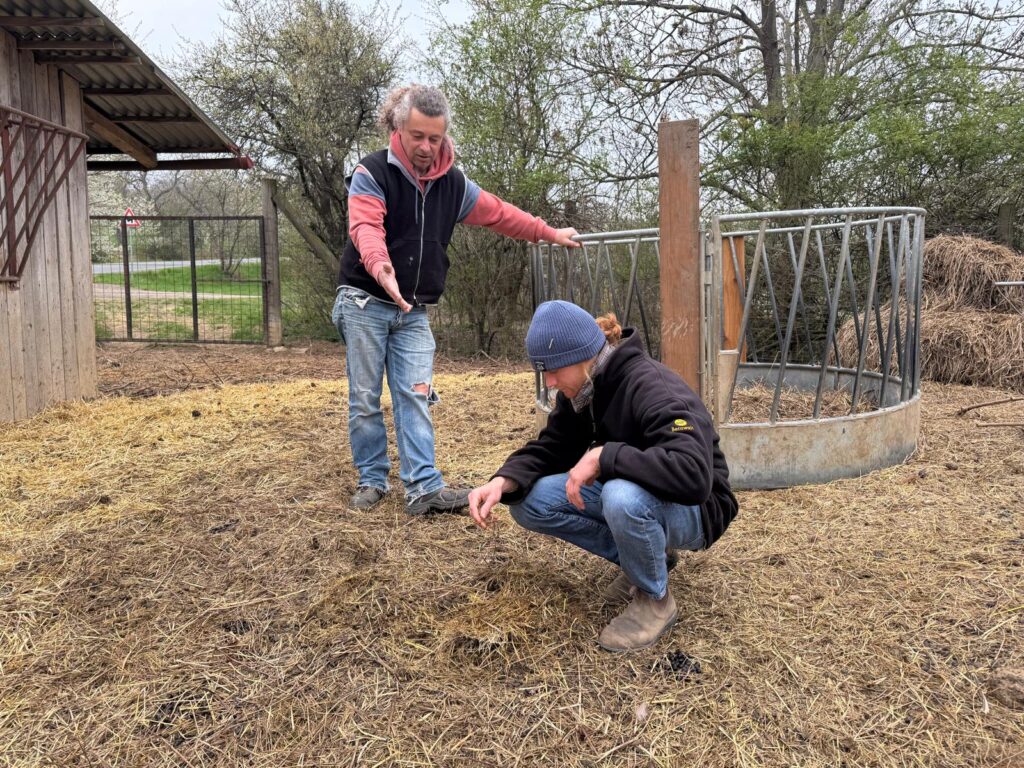
During his visit to us, Philip took part in the filming of a popular science documentary about water (Portrait of Water, by Young Waterfilms), visited two farmers to begin actively helping them improve their soil conditions, and we were also delighted to meet representatives from the Czech University of Life Sciences, Mendel University and Charles University, who expressed an interest in Philip’s work.
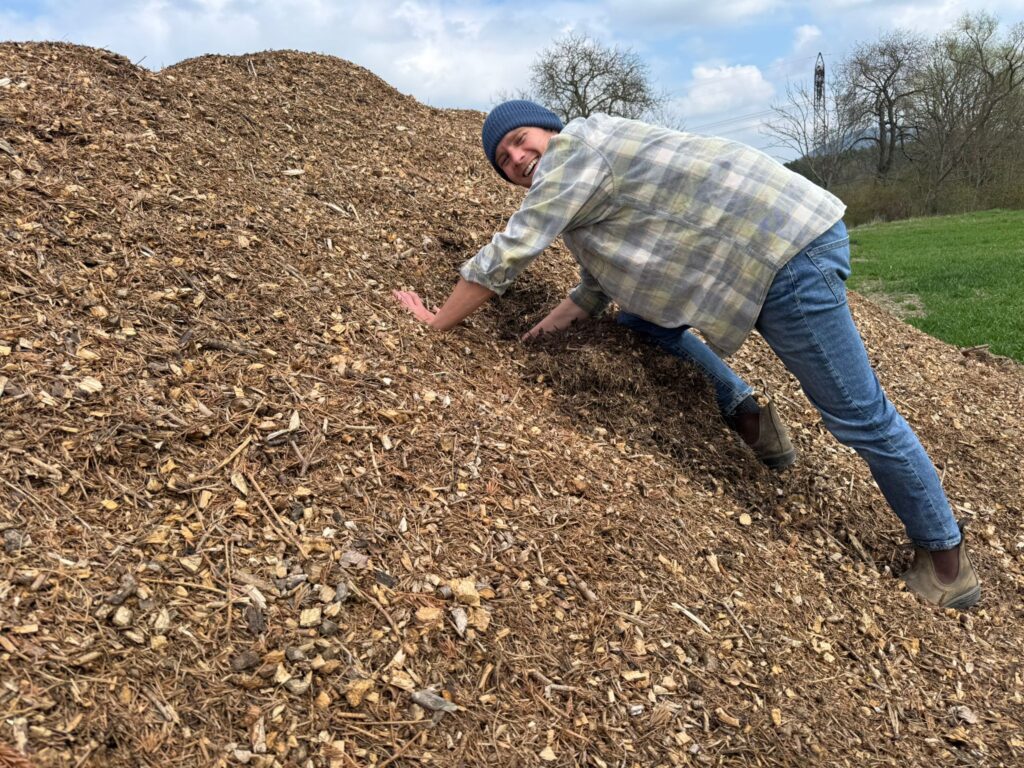
At the Vodňanský Farm, Philip was checking the input materials for the planned creation of large, fully organic compost heaps.
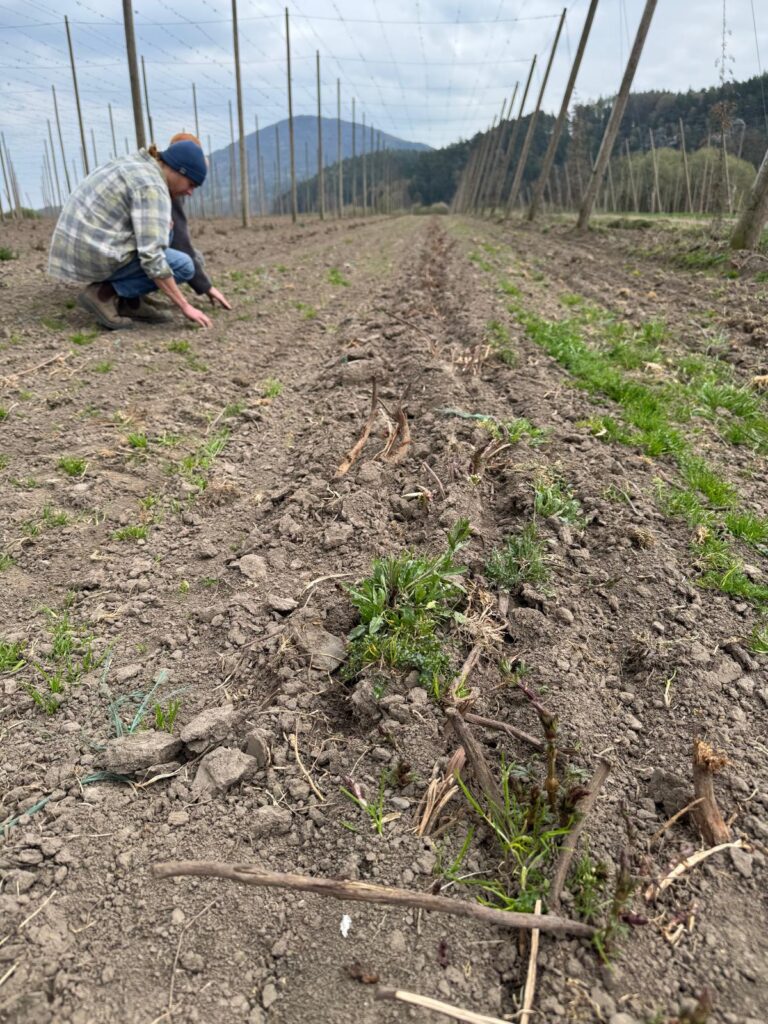
These measures will aim to increase the farm’s self-sufficiency in terms of soil fertility and improve soil (and crop) health. We also oversaw the sowing of a specially formulated mixture in the hop field’s inter-rows. This is part of our plan to experiment with more regenerative practices in hop cultivation.
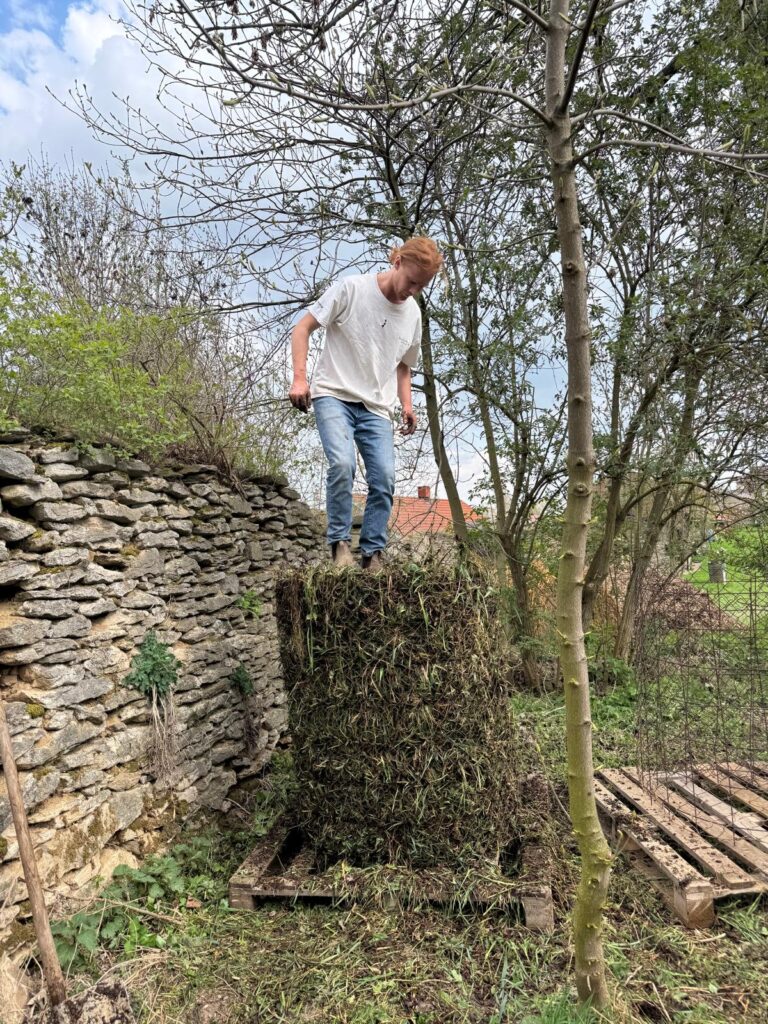
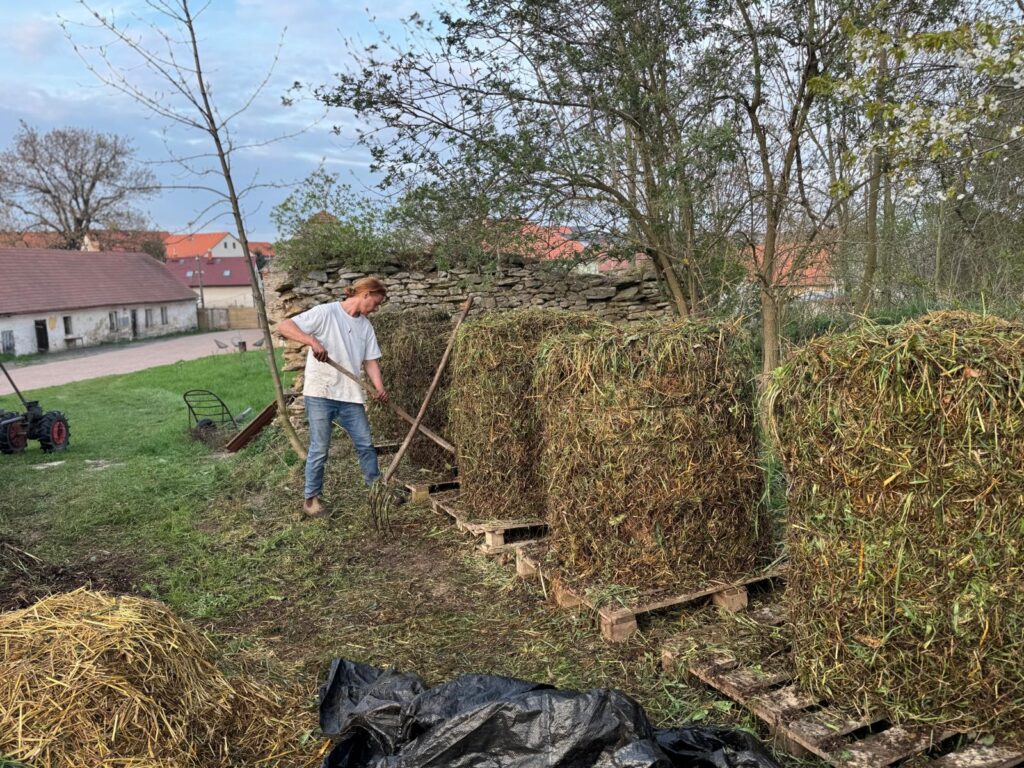
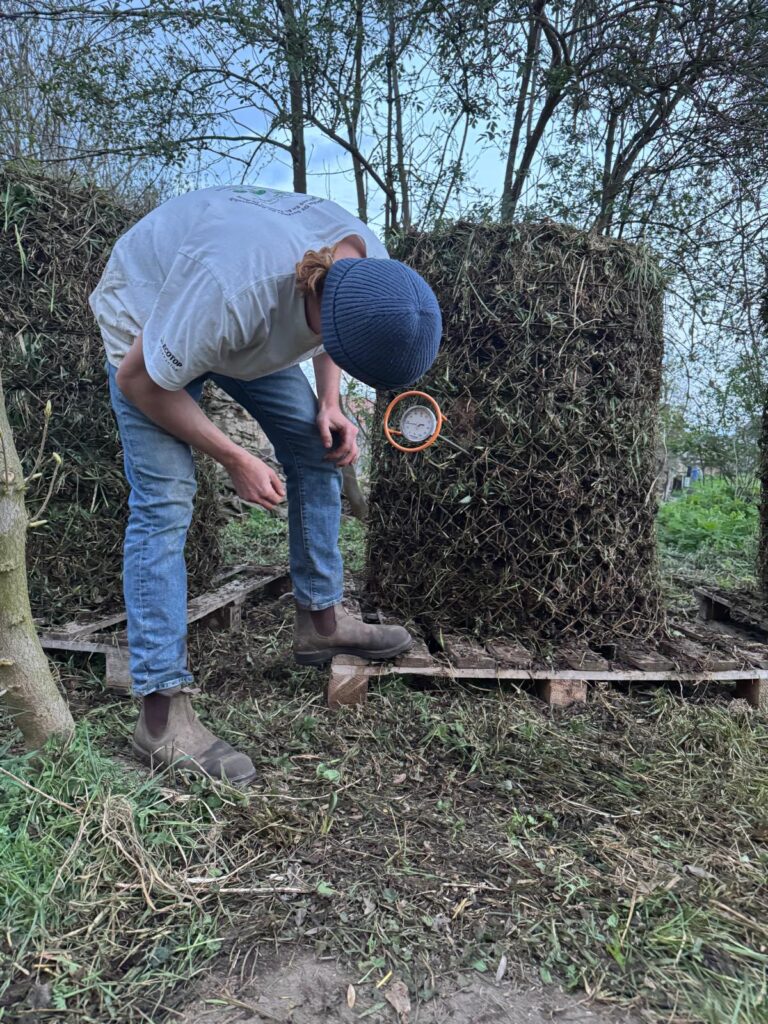
At the Jelen z Misek agroforestry farm, we set up various bio-complete compost heaps with the help of friends. We experimented with the available ingredients and their proportions. We will later examine them under a microscope and assess which recipe yields the best results in terms of creating a diverse and beneficial soil community.
The next step will be to scale up compost production using our most successful recipe and to prepare compost teas and extracts. These can then provide immediate benefits to our crops and are easy to apply.
We hope to make use of these powerful tools to prune plants and trees smoothly during the planned syntropic planting on the farm.
Sign up for our newsletter and follow us on social media. We’ll keep you updated on Philip’s upcoming visits, presentations and workshops, as well as our planned syntropic planting.